
Product list instead of an answer
Someone looks for an office chair under 500 euros for back pain. A long list helps less than a clear comparison.
More and more buying decisions start with a question to ChatGPT or Google. We measure for which buying and comparison questions your products get named and make product data and buying guides clear enough for AI to use.
For back pain, many look for adjustable lumbar support. Often named:
Your shop sells both models, but is not named.
Every product needs a clear answer.
In plain wordsAI recommends products and shops for which it finds clear, reliable details: what a product does, who it is for, what it costs and whether it is in stock. A plain product list rarely does that, a good buying guide more likely.
Someone looks for an office chair under 500 euros for back pain. A long list helps less than a clear comparison.

Material, sizes and delivery time only appear in images or differently in every description. That is hard for Google and AI to use.

Whoever gets the recommendation in the answer only visits the shop for price and stock. So it matters whether you get named then.
Searches with buying intent, such as buy, order or best tested, without brand names.
Buyers ask for the best product for a purpose. AI answers with products and shops. The ones named are those that describe features, sizes and delivery time in a way that can be compared.
Source: our own analysis of 2.38 million searches without brand names from over 300 websites, mostly from Austria, June 2025 to October 2026. Only searches that clearly belong to this industry are counted. Provider analysis
Shopping questions are mainly provider and price questions. In both, ChatGPT often names specific products and shops.
| Aspect | Example from your industry | ChatGPT names providers |
|---|---|---|
| Provider search | "which wallbox is best for home?" | 85% |
| Price question | "buy pellets cheap austria" | 55% |
| Comparison | "rent or buy pros and cons" | 39% |
| Knowledge question | "when to buy pellets" | 22% |
Source of percentages: our provider analysis with 873 searches, October 2026, all industries. The example questions come from our analyses and show how users in this industry ask, translated from German.
From our analyses: this is how buyers ask when they look for offers like yours, translated from German. Next to them: what your website needs for them.
Source: our own analyses of search queries, mostly from Austria, June 2025 to October 2026. Only questions that came up several times independently, without company, brand or personal names.
From the buying question to the product page, category by category.

Which products are searched with "best", "for" or "under 100 euros"? From search data and your bestsellers.
Result: buying questions per category
Which products and shops does AI name for these questions, and where does it get the details?
Result: your products compared with marketplaces and review sites
Features, dimensions, price, delivery time and stock clearly on the page and in the product data, plus buying guides for the key questions.
Result: product pages and guides that can be cited

We measure mentions in AI answers and orders from those visits one by one.
Result: see which category pays off
Who sells what to whom determines the questions. We measure the ones that fit your range.
Brands that sell directly and want to appear in the answer next to big marketplaces.
Shops with advisory knowledge that can show in buying guides and comparisons.
Buyers ask about specifications, quantities and delivery terms.
Questions about fit, material and occasion, often tied to images.
The platform shows per category which products AI recommends, which pages it takes the details from and where your products are missing.
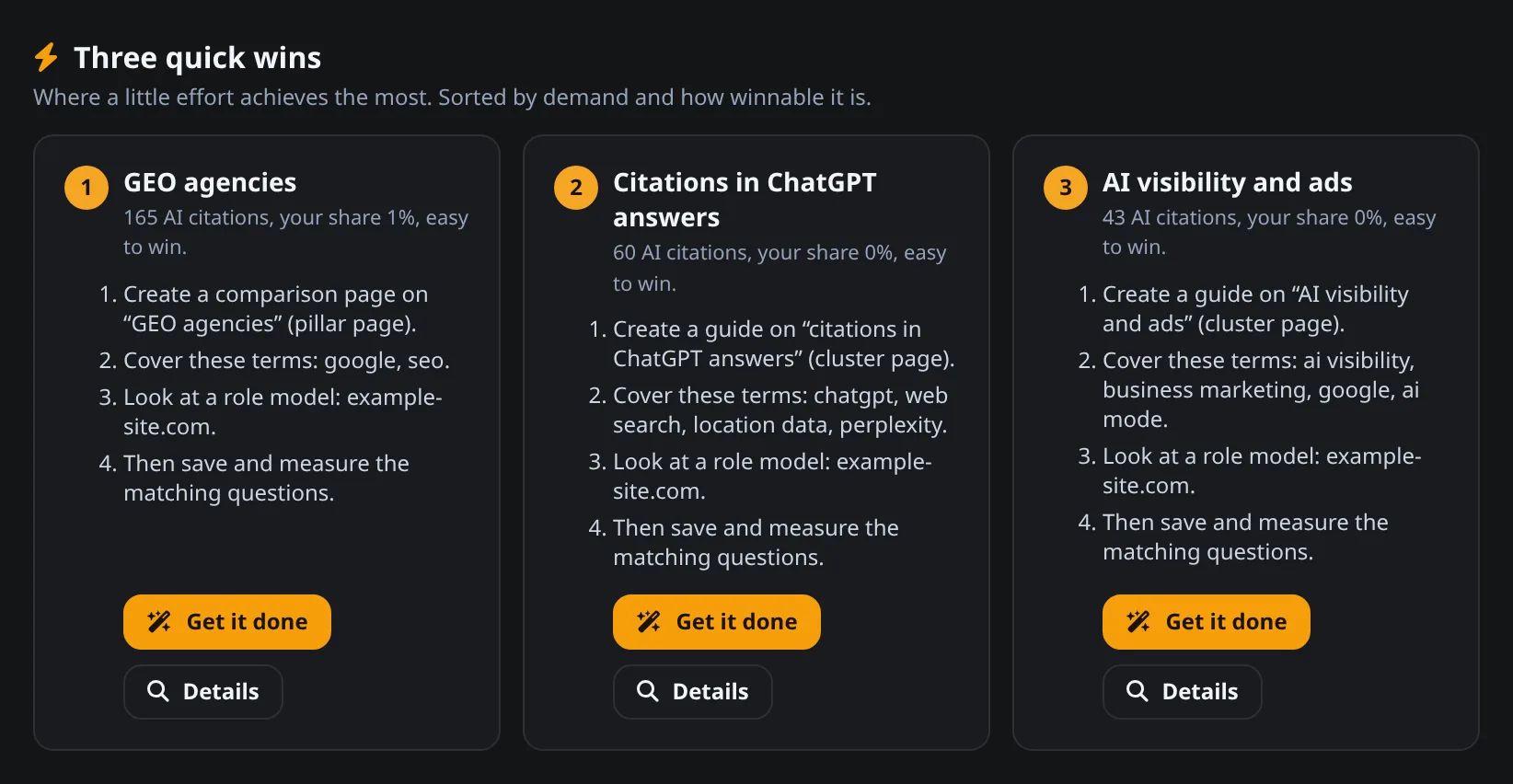
Measure first, then act.
In the first call we ask a few typical buying questions about your range live and show who gets named today. Free, no obligation, 30 minutes.
Your contact: Aredi Dragusha, aredi@atziry.com